
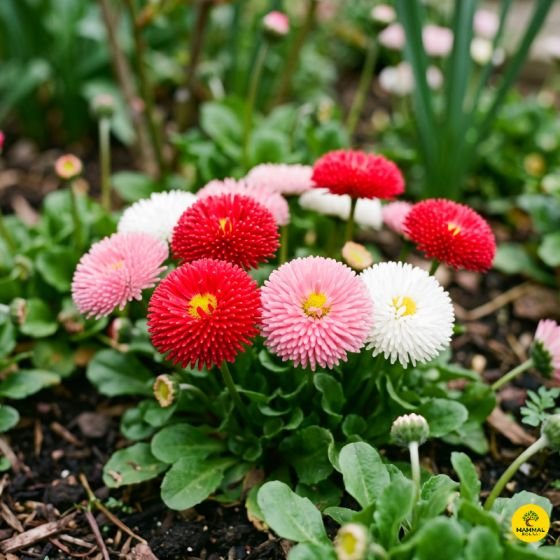
Bellis Flower Seeds are ideal for gardeners looking for a compact flowering plant with attractive daisy-like blooms. The plants form neat rosettes of spoon-shaped green leaves, with flower heads carried on short stems.
The species Bellis perennis is a herbaceous perennial. The typical flowers have a yellow centre surrounded by white ray florets that can have a pink or reddish tint underneath. Cultivated varieties can produce pink, red and white, including attractive double and pompom-type flowers.
Bellis prefers full sun to partial shade and moist but well-drained soil. Compact cultivars are particularly suitable for bedding, pots, flower borders and garden edging.
📋 Product Details
| Feature | Details |
|---|---|
| Product Name | Bellis Flower Seeds |
| Botanical Name | Bellis perennis |
| Common Names | English Daisy, Common Daisy, Lawn Daisy |
| Plant Type | Herbaceous Perennial |
| Family | Asteraceae |
| Flower Colors | White, Pink & Red shades depending on variety |
| Flower Type | Single or Double Daisy-like Blooms |
| Plant Height | Approx. 10–25 cm depending on variety |
| Growth Habit | Compact, Rosette / Clump-forming |
| Sunlight | Full Sun to Partial Shade |
| Soil | Moist, Fertile & Well-drained |
| Watering | Regular, Moderate |
| Propagation | Seeds / Division |
| Flowering | Mainly cool-season to spring, depending on climate and variety |
| Suitable For | Pots, Containers, Borders, Edging, Balcony & Garden Beds |
RHS lists common Bellis perennis at up to about 10 cm, while cultivated series such as Bellissima can reach around 25 cm.
🌿 About Bellis
Bellis is a classic daisy-type flowering plant known for its compact growth and cheerful flower heads.
The flowers may look like individual blooms, but botanically each flower head is made up of numerous tiny florets. The plant forms a neat rosette of spoon-shaped leaves, making it attractive even before flowering.
Cultivated Bellis varieties are commonly used for bedding displays, patio containers, flower borders and garden edging. Some double-flowered forms produce attractive pompom-like blooms up to around 4 cm across.
🇮🇳 Best Sowing Season in India
North Indian Plains – Haryana, Delhi, Punjab, Rajasthan & Western UP
For winter cultivation in the North Indian plains, September to October is a practical sowing window.
The objective is to establish young plants while temperatures are becoming cooler and allow them to grow through the winter toward spring flowering.
Bellis is naturally associated with temperate conditions, and Bellis perennis has also been recorded as introduced in parts of India, including the West Himalaya.
🌱 How to Grow Bellis from Seeds
1️⃣ Seed Sowing
- Use a fine, loose and well-draining seed-starting mix.
- Sow the small seeds very shallowly.
- Lightly press them into the surface and cover only with a very thin layer of fine medium.
- Keep the seed bed evenly moist.
- Place the tray in a cool, bright location.
2️⃣ Germination
Bellis seeds prefer cool to moderate temperatures.
Keep the growing medium consistently moist but never waterlogged. Germination can be somewhat variable depending on seed quality and conditions, so avoid disturbing the seed tray while waiting for seedlings to emerge.
3️⃣ Transplanting
Once seedlings have developed several true leaves and are strong enough to handle, transplant them carefully into individual pots or their final growing position.
4️⃣ Spacing
Maintain approximately 15–20 cm spacing for compact plants. Allow slightly more room for larger cultivars.
5️⃣ Watering 💧
Bellis prefers moist but well-drained soil.
Water whenever the upper layer begins to dry, particularly during active growth. Avoid prolonged waterlogging.
6️⃣ Soil Requirement
Use a fertile, moisture-retentive but well-draining growing medium.
Recommended pot mix:
- 40% garden soil
- 30% compost/vermicompost
- 20% cocopeat
- 10% coarse sand/perlite
7️⃣ Sunlight ☀️
Provide full sun to partial shade.
In North Indian winter, Bellis can receive several hours of direct morning sunlight. During unusually warm weather, some afternoon protection can help maintain better growth. RHS lists both full sun and partial shade as suitable positions.
8️⃣ Fertilization
Once plants are established, apply a mild balanced liquid fertilizer every 2–3 weeks during active growth.
Avoid excessive nitrogen because compact flowering plants generally do not require heavy nitrogen feeding.
🌿 Plant Care Tips
✔ Keep soil evenly moist but never waterlogged.
✔ Give good morning sunlight during winter.
✔ Maintain good air circulation around plants.
✔ Remove faded flowers regularly to maintain a neat appearance.
✔ Avoid excessive nitrogen fertilizer.
✔ Protect young plants from extreme heat.
✔ Bellis is generally relatively pest-free, although rust can occasionally occur.
✔ For container growing, always use a pot with adequate drainage holes.
❓ Frequently Asked Questions
Q. Can Bellis be grown in pots?
Yes. Bellis is particularly suitable for containers, patios, flower borders and garden edging.
Q. When should I sow Bellis seeds in Haryana?
For a winter-growing crop in the North Indian plains, September–October is a practical sowing period.
Q. Does Bellis need full sun?
Bellis can grow in full sun as well as partial shade.
Q. What type of soil does Bellis need?
It prefers moist but well-drained soil. It can tolerate different soil types provided drainage is good.
Q. What colors do Bellis flowers come in?
Depending on the variety, flowers can be white, pink and red. Double-flowered cultivars can produce pompom-like blooms.
Q. Is Bellis an annual or perennial?
Bellis perennis is a herbaceous perennial. However, some commercial bedding types may be treated as annual or biennial depending on the climate and cultivation system.
Q. Can Bellis be grown from seeds?
Yes. Bellis can be propagated by seed, as well as by division.
🌟 Special Features
- 🌼 Beautiful daisy-like flowers
- 🌸 White, pink & red shades
- 🌿 Compact rosette-forming plant
- 🪴 Excellent for pots and containers
- 🌱 Suitable for garden borders
- 🌷 Great for winter/spring displays
- 🌞 Grows in full sun or partial shade
- 🏡 Suitable for balconies and terrace gardens
- 🌼 Double-flowered varieties available
- ✨ Attractive even in small garden spaces
📌 Important Note
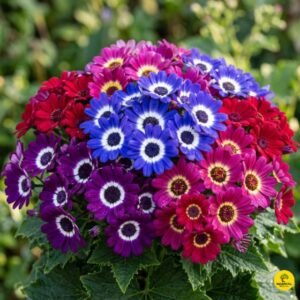
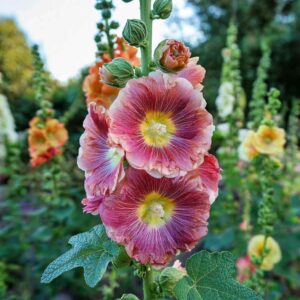
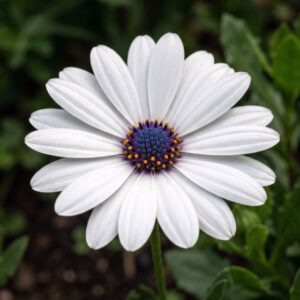
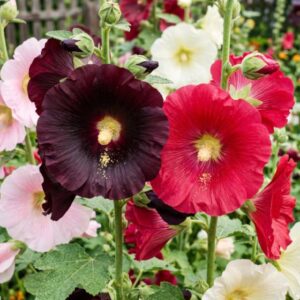
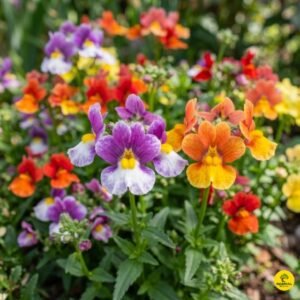
Images are for reference only. Actual flower color, flower size, plant height and flowering depend on seed variety, climate, soil, and care.
Reviews
There are no reviews yet.