
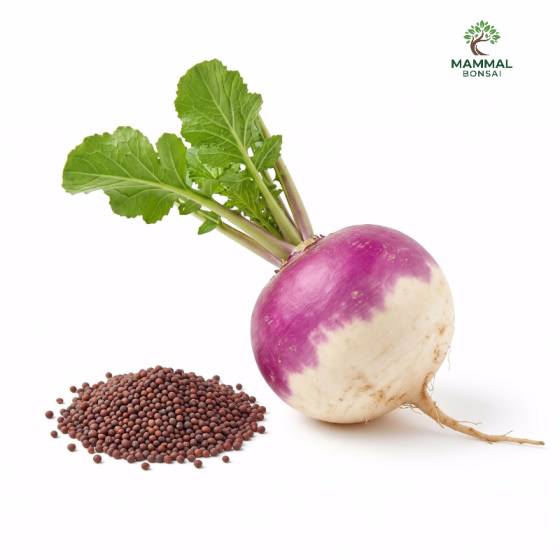
Turnip is a popular cool-season root vegetable grown mainly for its crisp, edible roots, while its tender green leaves can also be used as leafy vegetables. It belongs to the mustard and cabbage family and performs best during cool weather. Turnips are well suited to home and kitchen gardens and can be grown successfully in suitable containers, grow bags and raised beds.
Best Sowing Season in India:
- Plains: September – December
- Cool Regions / Hills: August – October
- Best Growing Period: Cool & Mild Weather
- Peak Growing Season: Winter
Turnip is primarily a cool-season crop. In Indian conditions, sowing is generally preferred during the cooler months. Exact sowing time can vary according to local climate, altitude and variety.
How to Grow from Seeds:
Seed Sowing:
Sow Turnip seeds approximately ¼–½ inch deep directly into a fine, fertile seed-starting mix or prepared garden soil. Turnips generally perform best when directly sown because root disturbance during transplanting can affect root development.
Germination:
Seeds generally germinate within approximately 3–7 days under suitable moisture and temperature conditions.
Spacing:
After germination, thin the seedlings to approximately 3–6 inches apart, depending on the variety and desired root size. Maintain sufficient space for proper root development and airflow.
Watering:
Keep the soil consistently moist during germination and root development. Avoid prolonged dryness as well as waterlogging, as irregular moisture can affect root quality.
Soil Requirement:
Use loose, fertile and well-drained soil enriched with mature compost or well-rotted organic manure. Avoid heavy, compacted soil because loose soil allows the edible roots to develop properly.
Sunlight:
Provide around 6–8 hours of sunlight daily. Turnips grow best in a sunny location during the cool season.
Fertilization:
Mix mature organic compost into the soil before sowing. A balanced vegetable fertilizer can be applied during active growth according to the product instructions. Avoid excessive nitrogen, as it can encourage leafy growth at the expense of good root development.
Thinning:
Once seedlings emerge, thin crowded plants carefully and maintain proper spacing. Thinning is important for producing healthy, well-shaped turnip roots.
Harvesting:
Harvest turnips when the roots reach the desired size and remain young and tender. Depending on the variety and growing conditions, roots may generally be ready around 40–60 days after sowing.
Plant Care Tips:
- ✔ Grow Turnips during cool weather
- ✔ Direct sow seeds for better root development
- ✔ Keep soil consistently moist but never waterlogged
- ✔ Use loose soil to allow roots to expand easily
- ✔ Thin seedlings to provide adequate root space
- ✔ Add mature organic compost before planting
- ✔ Protect young plants from common cabbage-family pests such as caterpillars and aphids
- ✔ Harvest roots while they are young and tender for better texture and taste
- ✔ Tender turnip greens can also be harvested and used as leafy vegetables
FAQ:
Q1: Can Turnips be grown in pots?
Yes! Turnips can be grown in pots, containers and grow bags. Choose a container with sufficient depth, good drainage and loose fertile soil for proper root development.
Q2: How long does Turnip take to germinate?
Turnip seeds generally germinate within approximately 3–7 days under suitable moisture, temperature and growing conditions.
Q3: How long does Turnip take to harvest?
Depending on the variety, season and growing conditions, turnips can generally be harvested approximately 40–60 days after sowing.
Q4: Should Turnip seeds be transplanted?
Direct sowing is generally preferred because turnips develop an edible root. Avoid unnecessary root disturbance during early growth.
Q5: When should Turnips be harvested?
Harvest when the roots have reached a suitable size and are still young and tender. Leaving roots in the soil for too long can result in tougher or less tender roots depending on the variety and conditions.
Special Features:
- ✅ Nutritious cool-season root vegetable
- ✅ Suitable for home & kitchen gardens
- ✅ Can be grown in pots and grow bags
- ✅ Produces attractive white edible roots
- ✅ Excellent winter vegetable for Indian gardens
- ✅ Fast-growing vegetable suitable for home gardening
- ✅ Tender green leaves can also be used as leafy vegetables
Note:
Images are for reference only. Actual root size, shape, color, plant growth, harvesting time and yield depend on seed variety, climate, soil, container size and care.

Reviews
There are no reviews yet.